
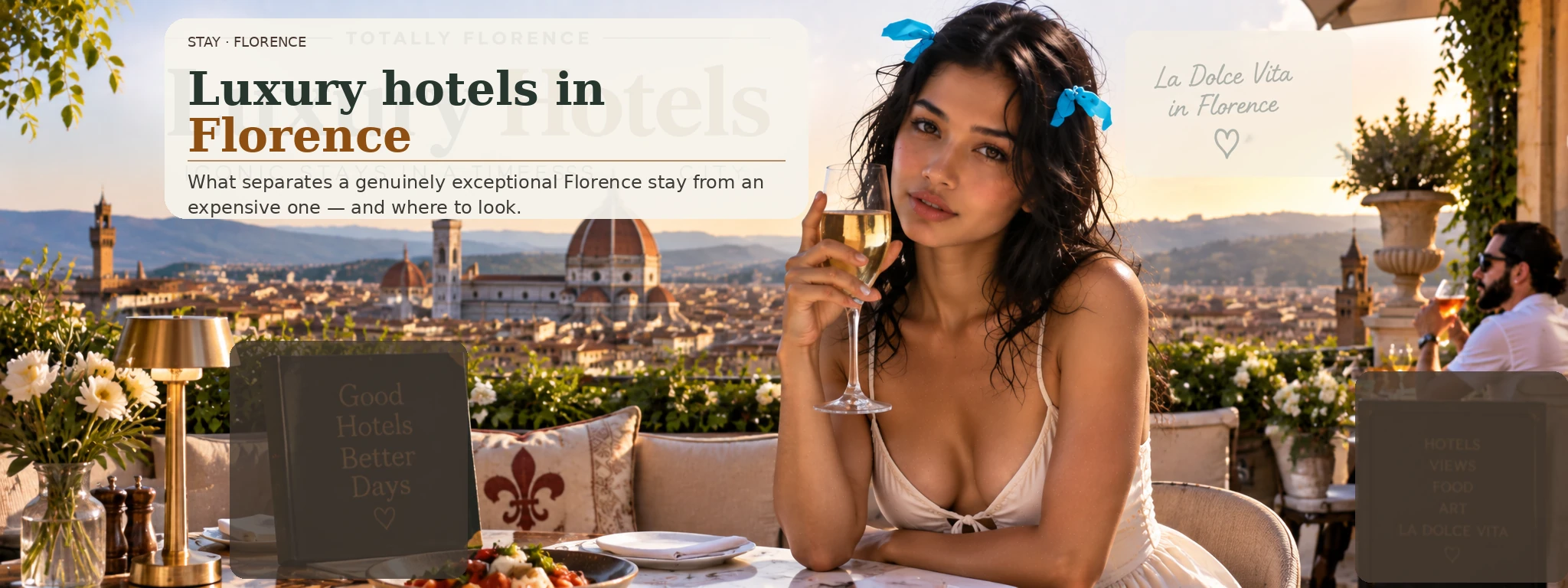
Luxury in Florence is unusually tied to the building itself. A five-star stay may be a converted Renaissance palazzo with frescoes and irregular rooms, a grand riverfront hotel with full service, or a small design-led property where the premium buys privacy and location rather than a long facilities list. The right choice depends on what you want the hotel to do for the trip.
Choose the type of luxury first
- Historic palazzo stays: best for architectural character and a strong sense of place. Ask about the exact room category because layouts can vary dramatically inside centuries-old buildings.
- Full-service five-star hotels: best when you want 24-hour reception, concierge depth, restaurants, larger common areas, spa or fitness facilities, easier vehicle arrangements and more predictable accessibility.
- Small luxury and design hotels: best when you value quiet, individual service and a strong aesthetic more than multiple restaurants or resort-style facilities.
- Villa-style stays outside the tight core: useful when space, gardens, views, parking or a slower evening atmosphere matter more than stepping straight onto the Duomo streets.
What is worth paying extra for in Florence
A genuinely useful location. “Five minutes from the Duomo” sounds ideal, but for some travellers a quieter street in Oltrarno or near the river produces a better stay than sleeping above the busiest pedestrian routes. Look at the exact entrance, not just the district name.
A terrace or view you will actually use. Florence rooftops can be magical, but marketing language is loose. Ask whether the terrace is private or shared, seasonal or year-round, seated or standing, and whether the Duomo or river is visible from your booked room category rather than only from a common area.
Concierge help with logistics. Good staff add real value when they help coordinate timed museum entry, restaurants, transfers, luggage, vehicle access and realistic day sequencing. That is more useful than generic “VIP” extras.
Quiet and climate control. Thick historic walls do not guarantee quiet, and old buildings can have room-specific temperature differences. Ask for a courtyard-facing room if street noise worries you and confirm air-conditioning arrangements for summer.
Accessibility is property-specific
Do not assume a high star rating automatically means a step-free historic building. FeelFlorence’s accessibility guidance advises travellers to contact accommodation directly for detailed information on barriers and services. Ask about street-to-lobby steps, lift dimensions, bathroom layout and whether accessible rooms are in the same building as the main facilities.
Arriving by car
Luxury hotels often make driving feel effortless, but Florence’s ZTL still applies. If your hotel or garage is inside the restricted zone, contact the property before arrival for the approved route and vehicle-registration procedure. FeelFlorence says guests should provide vehicle information to the hotel or garage so it can be transmitted to the Municipal Police; simply following a navigation app into the centre is not a safe strategy.
Do not forget the local tax
Florence’s municipal tourist tax is separate from the room rate. Under the city’s currently published schedule effective from 1 February 2025, a five-star hotel is €8 per person per night and a four-star hotel €7. Check exemptions and the current collection method with the property rather than assuming an online prepayment covered everything.
When luxury hotels become poor value
A premium property can be the wrong purchase if you will leave at 08:00 and return after dinner every day. In that case, location, sleep quality and breakfast logistics may matter more than a spa or formal service. Conversely, a hotel becomes part of the destination when you deliberately schedule downtime: a long breakfast, terrace drink, spa session or an afternoon back at the property between museums.
Booking strategy
For spring, early summer and September–October, I would book a cancellable room early if a specific property or room type matters. Then check the rate again closer to the trip. The smallest palazzo and boutique properties have fewer like-for-like alternatives if your preferred category sells out.